
Riley Long · 20 October 2026
Digital Archiving Methods Now Illuminate Overlooked Aster Species Distributions in 19th Century Estate Records
Digital archiving methods now illuminate overlooked aster species distributions in 19th century estate records through systematic digitization of handwritten ledgers, garden journals, and correspondence from large properties across North America and Europe. These records, once stored in physical archives with limited access, contain detailed notes on plant introductions, bloom times, and locations that researchers convert into searchable databases using optical character recognition and natural language processing tools. Data from these efforts reveal aster populations in regions where modern surveys had recorded gaps, including certain varieties of Symphyotrichum that appear repeatedly in estate inventories from the 1840s onward.
Core Techniques Driving the Discoveries
Teams apply metadata tagging to link specific aster mentions with geographic coordinates derived from period maps, while cross-referencing plant names against updated taxonomic authorities to correct outdated nomenclature common in Victorian-era documents. Machine learning models trained on herbarium specimens help identify ambiguous entries where scribes used local or abbreviated terms, and this process has uncovered distributions of species such as Aster novae-angliae in mid-Atlantic estates that lacked prior documentation in published floras. According to records processed by the Library of Congress digital collections, estate managers noted soil preferences and propagation methods that align with current ecological models for aster persistence in disturbed landscapes.
Regional Estate Examples and Patterns
Estate records from properties in New York, Pennsylvania, and Ontario show consistent aster plantings along boundary walks and in formal borders, with dates and quantities that allow reconstruction of movement patterns between sites. One collection from a Canadian estate near the St. Lawrence River lists multiple shipments of root divisions between 1852 and 1878, locations that digital mapping now places within zones previously thought devoid of those taxa until the 20th century. Similar patterns emerge in Scottish and German estate ledgers digitized through collaborative European archives, where aster entries coincide with periods of transatlantic seed exchange and provide timelines for species establishment outside native ranges.
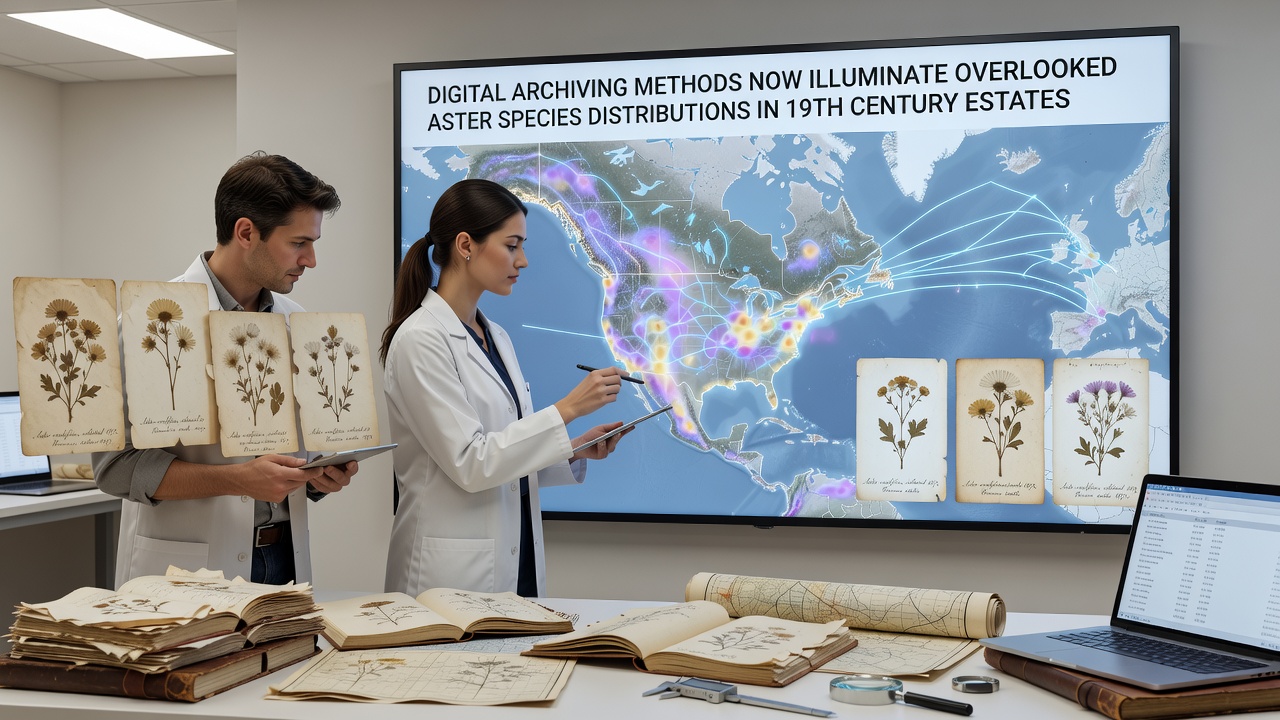
Researchers at the Australian National Botanic Gardens have contributed comparative data from parallel digitization projects on southern hemisphere estates, noting that some 19th century plant lists reference North American asters acquired through colonial trade networks. These cross-continental links help explain isolated records in Australian colonial gardens that match distributions reconstructed from American estate sources. The combined datasets indicate that certain overlooked species maintained populations through repeated introductions rather than single events, a finding supported by frequency counts extracted from thousands of digitized pages.
Upcoming Developments in October 2026
Additional layers of analysis scheduled for release in October 2026 will incorporate spectral imaging of faded ink entries and integration with climate reconstruction models from the same period. Institutions including the Smithsonian Institution plan to publish expanded datasets that connect aster notations to weather journals kept on the same estates, allowing correlation between bloom observations and seasonal conditions. This next phase builds on existing platforms and extends coverage to additional properties in the American South and Mediterranean Europe where records remain partially processed.
Impact on Broader Botanical Research
Botanical researchers use the resulting databases to test hypotheses about historical range shifts and to prioritize field surveys in locations flagged by the archival evidence. Figures released through collaborative projects show that digital methods have increased documented aster occurrences from 19th century sources by several hundred entries per major region, with verification steps that include physical herbarium checks and genetic sampling where living descendants of estate plants survive. These resources also feed into public portals that allow gardeners and historians to query distributions by species, decade, or property type without direct access to original manuscripts.
Conclusion
Digital archiving methods now illuminate overlooked aster species distributions in 19th century estate records by converting fragmented physical documents into structured, queryable information that reveals previously hidden patterns. Continued expansion of these efforts, including the October 2026 releases, will further refine understanding of how 19th century horticultural practices shaped current plant distributions across multiple continents.